

Quick answer: Law firm lead generation means turning people with a legal problem into booked consultations. On your website, that takes practice area pages that answer specific questions, visible trust signals, an easy first step (call, short form or chat), fast intake follow-up and tracking that shows which pages and channels produce signed clients.
Most law firms do not have a traffic problem as much as a conversion problem. People land on the site, read a page, and leave without calling, often because the next step is unclear or the form asks too much too soon. Others do reach out, but wait hours for a reply and hire the firm that answered first. Law firm lead generation fixes both ends: it brings the right people to the right page and makes it easy and fast for them to talk to you. This guide covers the website pieces that matter most, how to design a consultation form people actually finish, how intake speed affects results, and how to track attorney leads all the way to signed cases.
Key Takeaways
- A potential client usually lands on a practice area page, not your homepage, so every practice page needs its own call to action.
- Short consultation forms (name, phone, email, short description) get more submissions than long intake questionnaires.
- Response speed is part of lead generation: the firm that calls back first often wins the case.
- Call tracking and form tracking show which pages and channels bring signed clients, not just clicks.
- Every claim on your site must follow your state’s attorney advertising rules.
What is law firm lead generation?
Law firm lead generation is the process of attracting people who need legal help and converting them into consultation requests. Leads can come from search, referrals, Google Business Profile, ads or directories, but for most firms the website is where the decision to reach out happens.
There are two broad approaches. Firms can buy shared or exclusive leads from third-party services, or they can generate their own leads through their website, SEO and ads. Bought leads can fill gaps, but they are often shared with other firms and stop the moment you stop paying. Leads from your own site build on each other: a well-ranked practice page keeps producing consultations month after month.
Why do law firm websites lose potential clients?
Law firm websites lose potential clients when visitors cannot quickly see that the firm handles their exact problem, trust the firm, and know what to do next. The most common causes we see:
- Generic practice pages. A single “Practice Areas” page with a list of bullets does not reassure someone with a specific problem.
- Hidden phone numbers. On mobile, the number should be one tap away at the top of every page.
- Long intake forms. Asking for case details, dates and opposing parties on the first contact scares people off.
- No proof. Missing attorney bios, credentials and reviews make the firm look anonymous.
- Slow follow-up. A form that goes to a shared inbox nobody checks after 5 p.m. wastes the lead.
For a broader checklist of conversion problems that apply to any service business, see how to get more leads from your website.
How do you turn website visitors into consultations?
You turn visitors into consultations by building a clear path from the page they land on to a booked call, and removing every unnecessary step along the way. Think of it as an intake path with five stages.
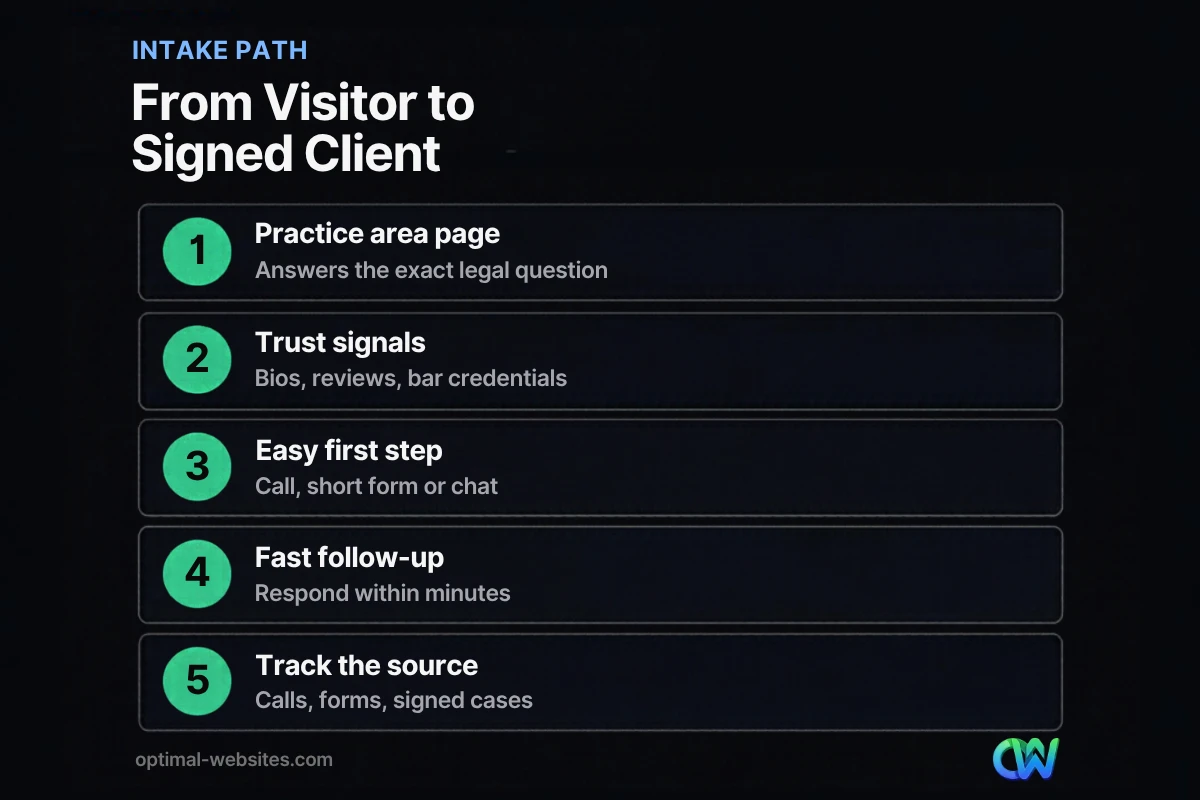
1. Build a page for each practice area and case type
Each practice area page should answer the question a potential client is asking: “Can this firm help with my situation?” Include who you help, common situations, how the process works, what to bring to a consultation and a clear call to action near the top and bottom. A family law firm, for example, benefits from separate pages for divorce, custody and support rather than one combined page. This structure also helps with law firm SEO, because each page can rank for its own searches.
2. Show trust before asking for anything
People choosing a lawyer are often stressed and cautious. Put trust signals close to your call to action: attorney photos and bios, years in practice, bar admissions, professional memberships and genuine client reviews. Results and testimonials can be powerful, but they must follow your state’s version of ABA Model Rule 7.1, which bars false or misleading communications about a lawyer’s services, plus any disclaimer rules your state adds.
3. Offer more than one easy first step
Some people want to call right away. Others want to send a quick message at night. Offer both:
- A tap-to-call number in the header on mobile
- A short consultation form on every practice page
- Optional live chat or an after-hours answering service
- Online scheduling if your intake process allows it
4. Respond fast, and have a script
Speed is where many firms lose cases they already earned. Someone with a legal problem often contacts several firms at once. Set a goal of responding to new inquiries within minutes during business hours, and use an answering service or intake team after hours. A simple intake script helps staff qualify the lead, check conflicts and book the consultation on the first call.
5. Track every lead to its source
If you do not know where signed cases come from, you cannot invest in what works. The next section covers tracking.
What should a law firm consultation form include?
A law firm consultation form should collect only what you need to make contact and route the lead: name, phone, email, practice area and a short description of the situation. Everything else can wait for the intake call.
| Field | Include? | Why |
|---|---|---|
| Name | Yes | Basic contact |
| Phone | Yes | Most legal intake happens by phone |
| Yes | Backup contact and confirmation | |
| Practice area (dropdown) | Yes | Routes the lead to the right attorney |
| Short description | Yes, optional length | Helps prioritize urgent matters |
| Preferred contact time | Optional | Improves connect rates |
| Detailed case history, dates, opposing party | No | Save for the intake call, after conflicts check |
Add a short line near the form explaining that submitting it does not create an attorney-client relationship and that people should not send confidential details yet. That protects the firm and sets expectations. Our guide to building a lead capture form covers design details such as button text and mobile layout.
How should law firms track calls and forms?
Law firms should track every phone call and form submission back to the page and channel that produced it, then connect those leads to signed cases. That turns “we get some leads from the website” into clear numbers you can act on.
Set up the basics
- Form tracking: Mark successful form submissions as key events in Google Analytics 4, which Google describes as a way to measure actions that are important to your business.
- Call tracking for law firms: If you run Google Ads, you can track calls from your website using Google forwarding numbers that replace your number for visitors who clicked an ad. For organic and other channels, a dedicated call tracking service can assign numbers by source.
- Intake log: Record the source of every new matter in your intake software or a simple spreadsheet.
Measure what matters
| Metric | What it tells you |
|---|---|
| Consultation requests per practice page | Which pages persuade visitors |
| Response time to new leads | Whether intake is losing cases |
| Consultation to signed case rate | Lead quality by channel |
| Cost per signed case (for paid channels) | Whether ads are worth it |
Review these numbers monthly. Often the biggest gains come from fixing intake speed or one weak practice page, not from buying more traffic.
What we see when building law firm websites
We have built websites for law firms such as Wright Ryon & Maher and F. J. Collins Law, and the same pattern comes up: firms invest in a polished homepage while the practice area pages, where most visitors actually land, get far less attention. Building every practice page from one strong Elementor Pro template with a phone button, a short form and attorney trust signals keeps the experience consistent. It also lets the firm add new practice areas later without a redesign. For more on the full site, read our guide to law firm website design.
How Optimal Websites Can Help
Optimal Websites, a WordPress web design agency based in Delaware, builds law firm websites designed around intake. We plan practice area pages, consultation forms, tap-to-call buttons and tracking from the start, then build mobile-first in Elementor Pro so your team can update content easily. Our lead generation services help firms turn existing traffic into more booked consultations.
Frequently Asked Questions
What is the best lead generation strategy for law firms?
The best law firm lead generation strategy combines strong practice area pages, local SEO, a well-managed Google Business Profile and fast intake. Paid ads can add volume, but they work best when the landing pages already convert. Most firms see the biggest gains by fixing response time and making it easier to call or submit a short form.
Should law firms buy attorney leads?
Buying attorney leads can fill a calendar quickly, but those leads are often shared with other firms and stop when you stop paying. Leads from your own website, search rankings and referrals build over time and are usually exclusive. Many firms use bought leads only as a short-term supplement while their own channels grow.
How fast should a law firm respond to a new lead?
As fast as possible, ideally within minutes during business hours. People with legal problems often contact several firms and hire the first one that responds helpfully. Use an intake team or answering service after hours, and set up instant email or text alerts so new consultation requests never sit unread.
What information should a legal intake form ask for?
Keep the first form short: name, phone, email, practice area and a brief description. Detailed facts, dates and names of other parties should wait until the intake call, after a conflicts check. Add a note that submitting the form does not create an attorney-client relationship and that confidential details should not be included.
How do law firms track where clients come from?
Law firms track client sources with form tracking in Google Analytics 4, call tracking numbers by channel, and an intake log that records how each new client found the firm. Connecting those sources to signed cases shows which pages, ads and directories actually produce clients, not just website visits.
Can a law firm website generate leads without ads?
Yes. A law firm website can generate steady leads without ads through practice area pages that rank in search, a strong Google Business Profile, reviews and referrals that land on a credible site. Organic law firm lead generation takes longer to build than ads, but it keeps working without a monthly ad budget.
Ready to Get Started?
Want your website to book more consultations? Request a free quote or call (302) 554-9497 to talk with our team about your firm.


